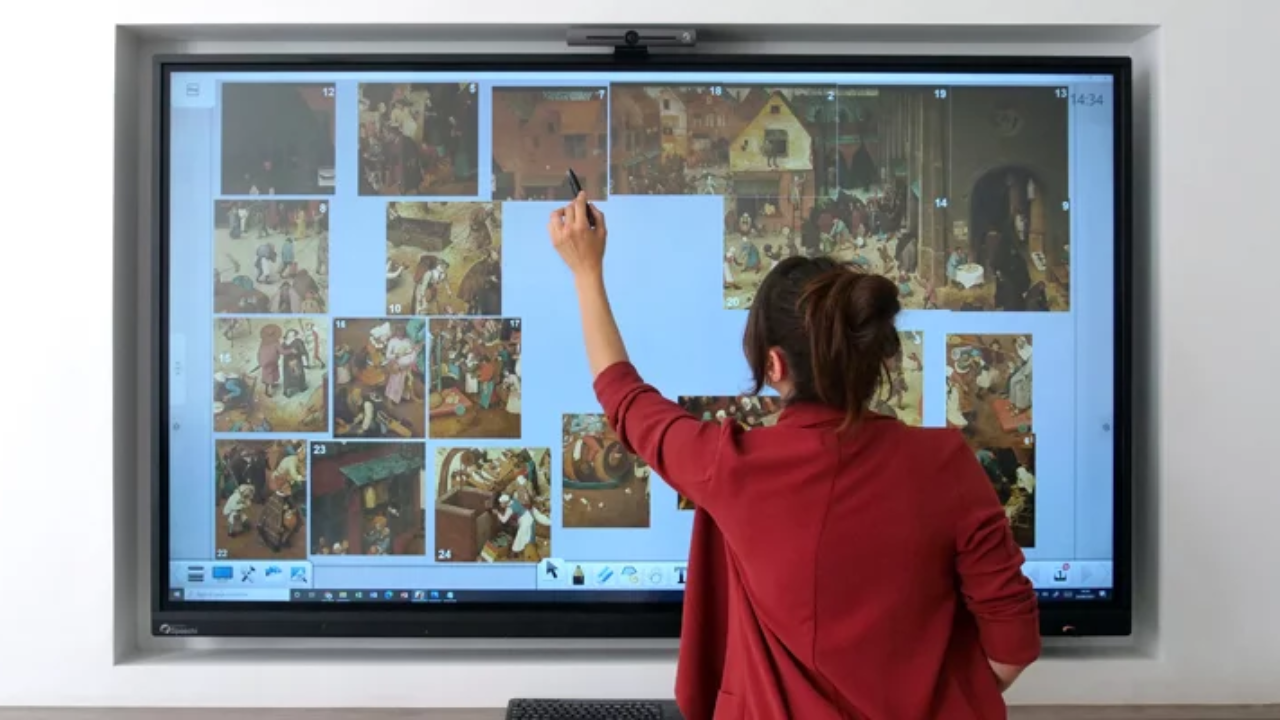
Like the artists they exhibit, museums constantly reinvent themselves to capture visitors’ attention. As a result, many museums have turned to touchscreen displays. But how exactly can they help improve access to art?
Perhaps you were one of those children who had no desire to go to museums. Heavy feet and minutes dragging on like endless hours remain unpleasant memories for some. Now imagine a much more immersive experience: bringing great painters to life, or exploring artworks in 3D… This creates a unique moment that is likely to attract larger crowds to museums.
Today, it is possible to immerse visitors in entirely new experiences and worlds. This perspective appeals to many museums and artists, encouraging them to adopt new technological tools.
Interactive screens: a new perspective for museums
The arrival of the SpeechiTouch interactive digital screen at the Soulages Museum in Rodez in 2016 marked a turning point for the city. This touchscreen, equipped with 4K resolution, made it possible to enhance the discovery of this 11th-century building. In addition to providing visitors with extra information about the abbey, the interactive screen allows them to explore every corner of the building—even the most inaccessible ones—by zooming in on its 3D reconstruction.
Touchscreens generate significant interest among younger audiences. “The technological aspect is a real attraction for visitors, especially for young people, for whom the tool and its use are second nature,” said Claire Molinier, a member of the tourism development department in Rodez, regarding the use of interactive digital screens in the museum.
Making museum visits more engaging with interactive screens
Across France and Europe, immersive exhibitions are multiplying, aiming to provide visitors with a unique experience and make them feel involved in the exhibition. To achieve this, museums are diversifying their activities. For example, since 2022, the Oceanographic Museum of Monaco has relied on interactive touchscreen displays for its “Polar Mission” exhibition. During the experience, younger visitors take on the role of journalists. They have access to interactive stations throughout the visit, displaying information to help them create their own report. At the end, they leave with their own “journalistic” creation—an innovative experience that would be impossible without interactive touchscreens.
Display screens for exhibiting digital artworks
Art is also becoming digital and gaining momentum thanks to Non-Fungible Tokens (NFTs), authentication certificates that make digital artworks impossible to plagiarize. But how can these new types of masterpieces be exhibited? High-quality display screens, such as SpeechiDisplay, provide the answer. Thanks to this technology, it is now possible to admire fully digital artworks, including those created by artificial intelligence.